




Tracker or fixed rate mortgage: Which one should I choose?
 Andy Shead
If you’re applying for a mortgage soon or you’re looking for ways to get a lower interest rate, one of the key choices you’ll need to make is deciding between a tracker or fixed rate mortgage. But which one should you choose?
Key takeaways
- Fixed rate mortgages lock in your interest rate for a set period (usually 2-10 years), giving you payment certainty and protection from rate rises
- Tracker mortgages follow the Bank of England base rate, meaning your payments can go up or down - but tracker rates are often lower than fixed rates
- The right choice depends on your circumstances: fixed rates suit those who value certainty and want to budget precisely, while trackers suit those comfortable with some risk in exchange for potential savings
- Speak to an expert before deciding - they can help you weigh up current market conditions and what works best for your personal situation
If you’re applying for a mortgage soon or you’re looking for ways to get a lower interest rate, one of the key choices you’ll need to make is deciding between a tracker or fixed rate mortgage. But which one should you choose?
Compare your mortgage options
Our award-winning mortgage advisers can help you decide whether a fixed or tracker mortgage is the right fit and find the best deal from over 100 lenders.
What’s the difference between a fixed rate and a tracker mortgage?
The key difference between fixed rate and tracker mortgages is what happens to your interest rate over the course of your mortgage deal. With a fixed rate mortgage, your interest rate (and therefore your monthly repayments) are fixed for a set period of time - usually 2, 3, 5 or 10 years.
With a tracker mortgage, your interest rate usually tracks the Bank of England’s base rate, so your interest rate and monthly costs will rise and fall month to month in line with the base rate, which changes up to 8 times a year.
The amount of interest you’ll actually pay on a tracker mortgage is usually a little higher than the base rate, because lenders usually add an additional percentage for themselves. For example, if the base rate stands at 3.75% and your lender charges a 0.75% margin, you’ll pay 4.5% interest. If your lender charges a 1% margin, your interest rate would be 4.75% as long as the base rate stays in its current position.
Learn more: What happens when my fixed-rate mortgage ends?
You might like: The inside scoop on rising interest rates
Is a fixed rate mortgage or a tracker mortgage better?
At its heart, the decision is simple: do you value payment certainty, or are you comfortable taking on some risk in return for potential savings? Whether a fixed rate or tracker mortgage is better depends on your individual circumstances. Some people find fixed-rate mortgages work better for them, while others prefer the flexibility of a tracker mortgage. The right mortgage type for you will depend on your finances, goals and outlook on money and risk.
Fixed-rate mortgages can offer you protection from future interest rate rises because no matter what happens to the Bank of England’s base rate, the amount you’ll pay during the term will stay the same. A fixed rate deal can also give you peace of mind if you prefer knowing exactly how much you’ll be paying each month, regardless of what’s going on in the mortgage market.
However, once your fixed period ends, you’ll be moved onto your lender’s standard variable rate (SVR). The SVR will vary from one lender to another, but it’ll usually be influenced by the base rate and is often higher than the rates offered on fixed-rate or tracker-rate mortgages. If the base rate goes up, lenders tend to increase their SVR to reflect the increased cost of borrowing. These increases aren’t always in line with the BoE’s rise, though.
Plus, if interest rates drop during your fixed rate term, you could be paying a higher rate than what’s currently offered on the market. However, leaving your fixed rate deal early could see you paying fees such as an Early Repayment Charge (ERC), so switching early to benefit from lower rates could be costly.
In comparison, with a tracker rate mortgage you won’t have the certainty of knowing exactly what your monthly costs will be. If interest rates rise, your repayments will do. This could mean that your mortgage repayments become too high for you to afford.
However, if rates drop, those on a tracker rate mortgage will see their monthly costs fall, while those on fixed rate deals won’t benefit from the reduced rates.
The rate of interest on tracker rate mortgages is also often lower than those offered on fixed rate deals. So while it can feel unnerving not knowing how much your monthly costs will be month-to-month, a tracker mortgage could help you access lower rates during times of higher borrowing costs.
Learn more: What to do if you can’t afford to remortgage
See what you could be offered
To work out whether a fixed-rate or tracker mortgage is best for you, it’s best to speak to an expert. Get started by completing your mortgage options with Tembo today. We’ll send you a free, personalised recommendation, showing you how much you could borrow and what mortgage rates you can expect.
Pros and cons of fixed-rate mortgages
Pros
Protection from future interest rate rises
Easier to budget and plan ahead
Peace of mind
Cons
Fixed-mortgage rates are often a little higher than tracker rates
If interest rates fall, you’ll be tied into a more expensive deal
If you want to switch to a new deal early, you’ll usually have fees to pay
Pros and cons of tracker mortgages
Pros
Your rate will likely only change if the Bank of England changes the base rate
Tracker mortgage rates are usually lower than fixed rates
Often fewer early repayment or overpayment penalties, giving you extra flexibility if you want to switch deals or pay down your loan sooner.
Cons
If the base rate rises, your repayments will too
Your mortgage payments could become unaffordable if rates rise significantly
Should I get a fixed rate mortgage or a tracker mortgage?
Whether borrowers should get a fixed rate or tracker mortgage depends on their own personal circumstances and goals.
You also need to take into account what’s going on in the mortgage market and economy to make an informed decision.
This is why it’s beneficial to get expert advice, so you can be advisede on the best course of action for you.
The Bank of England has held the base rate for all of 2026 at 3.75%. While interest rates remain higher than many borrowers became used to in previous years, mortgage rates have generally begun to ease as lenders compete for business and expectations of future rate cuts have grown.
No one can say for certain what will happen next. Future mortgage rates will depend on a range of factors, including inflation, economic growth and future decisions by the Bank of England.
No one can say for certain what will happen next. Future mortgage rates will depend on a range of factors, including inflation, economic growth and future decisions by the Bank of England.
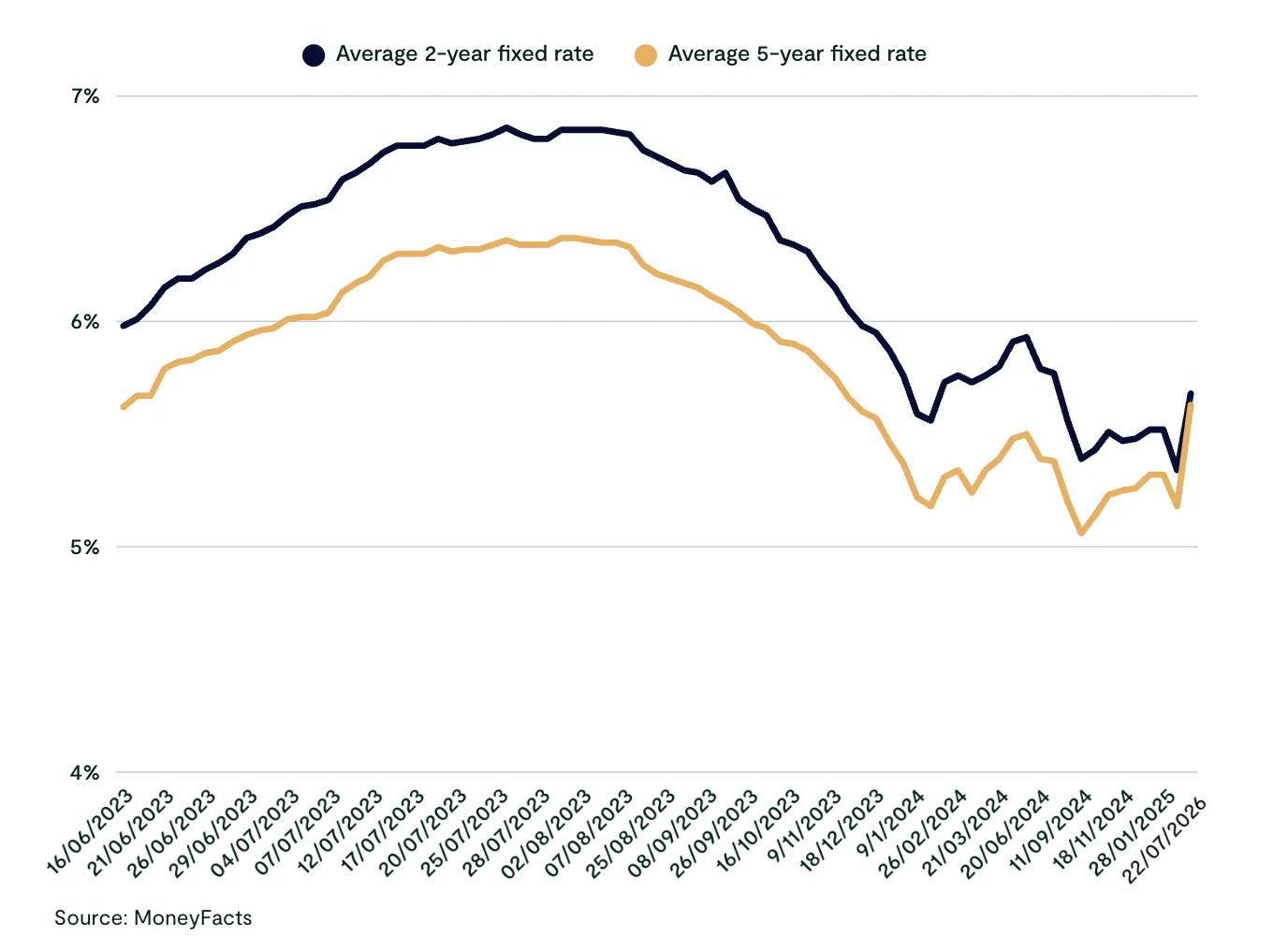
As the chart below shows, mortgage rates have been dropping over the last couple of months. If you locked in a fixed rate now, only for rates to fall, you could end up with a higher interest rate, making your monthly costs more expensive.
Remember, trying to time the market perfectly can backfire; focus instead on whether the payments are affordable for you now and in the long-term.
Learn more: What is the inflation rate and how does it affect your mortgage?
Should I switch my tracker mortgage to a fixed rate mortgage?
If you currently have a tracker mortgage and you’re worried about rising interest rates, switching to a fixed rate mortgage can give you certainty in the coming years. If you’re risk averse and fixed payments will help you sleep at night, a fixed-rate mortgage may suit you well. However, if rates go down, you could end up with a higher interest rate than what’s currently available. It’s always best to speak to an expert about your options to help you make the right decision for you.
Before you switch, check any fees. Many tracker deals carry lower early-repayment or overpayment charges than fixed-rate mortgages, but there can still be exit or product-transfer costs that eat into any savings.
Get expert advice from our award-winning team
It can be hard to work out whether to fix your mortgage and if so, how long to fix it for. That’s why it’s best to speak to a mortgage expert before making a decision. Here at Tembo, a member of our award-winning team can advise you on the best course of action for your personal circumstances.
Why choose Tembo?
We specalise in helping buyers, movers and remortgagers boost their mortgage affordability so they can buy sooner, or get access to a better mortgage deal. It's why we've been voted the UK's Best Mortgage Broker four years running.